Marley Heritage: A Modern Script with Timeless Charm
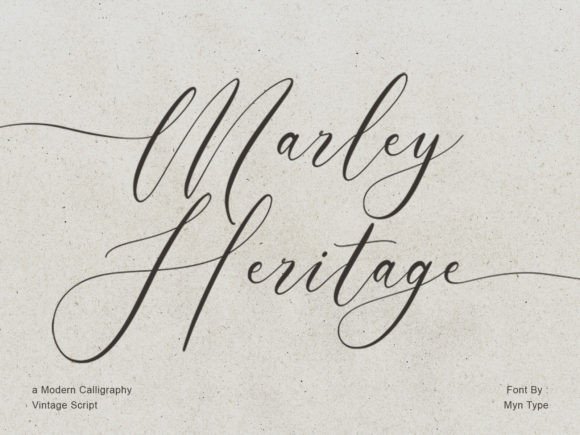
Finding a script font that balances elegance with readability can feel like searching for a needle in a haystack. Many decorative typefaces sacrifice clarity for style, leaving designers frustrated when their beautiful lettering becomes illegible at smaller sizes. Marley Heritage solves this common problem by offering a modern calligraphy vintage script that maintains its graceful aesthetic while staying functional across various applications.
What Makes Marley Heritage Stand Out
At first glance, Marley Heritage presents itself as a premium font with distinctive thin line strokes that create an airy, sophisticated appearance. The letterforms flow naturally, mimicking the organic movement of hand-lettered calligraphy without the inconsistencies that sometimes plague purely script-based typefaces. Each character connects smoothly to its neighbors, creating a cohesive rhythm that feels both intentional and effortless.
The vintage quality of Marley Heritage comes from subtle details in its construction. You'll notice gentle curves and delicate terminals that reference traditional calligraphic techniques while maintaining a contemporary sensibility. This blend of old and new makes it versatile enough for modern branding projects yet timeless enough for applications where classic elegance matters.
What truly sets this script font apart is its personality. It doesn't try to be overly ornate or dramatically flourished. Instead, Marley Heritage communicates warmth, authenticity, and refined taste. It feels approachable rather than pretentious, which makes it particularly effective for brands that want to convey sophistication without alienating their audience.
Where Marley Heritage Truly Shines
Understanding where a font performs best helps you make smarter design decisions. Marley Heritage excels in specific contexts where its characteristics can create maximum impact.
Logo Design and Brand Identity
For logo design, this typeface offers remarkable versatility. The thin strokes create logos that feel light and elegant, perfect for brands in fashion, beauty, lifestyle, or artisanal food spaces. A bakery might use Marley Heritage for its wordmark to suggest handcrafted quality. A boutique hotel could leverage its vintage charm to evoke timeless hospitality.
However, consider your brand's personality carefully. Marley Heritage works beautifully for brands that want to communicate elegance and authenticity. If your brand identity leans more toward bold, industrial, or ultra-modern aesthetics, a sans serif font might serve you better as your primary typeface, with Marley Heritage playing a supporting role.
Wedding and Event Materials
Wedding invitations represent one of the most natural applications for this font. The modern typography sensibility ensures invitations feel current rather than dated, while the calligraphic quality adds romance and formality. Save-the-date cards, ceremony programs, reception menus, and thank-you notes all benefit from Marley Heritage's consistent elegance.
Event planners working on galas, fundraisers, or milestone celebrations will find similar value. The font creates an immediate sense of occasion without requiring additional decorative elements to establish tone.
Digital and Print Applications
Web design projects can incorporate Marley Heritage effectively, though with some considerations. It works beautifully for hero sections, large headlines, or decorative elements where its thin strokes can be appreciated at scale. For body text or smaller applications on screens, pairing it with a clean serif font or sans serif font ensures readability remains strong.
Social media graphics represent another excellent use case. Quote cards, promotional announcements, and branded content templates benefit from the font's visual appeal and distinctiveness. In crowded feeds, Marley Heritage helps content stand out while maintaining professional polish.
Editorial design projects like magazine covers, feature spreads, or book chapter headings can leverage the font's elegant personality. Similarly, packaging design for premium products—think artisanal chocolates, specialty teas, or luxury candles—gains sophistication through its refined letterforms.
Working Effectively with Marley Heritage
Choosing a creative font is only the beginning. Using it effectively requires thoughtful implementation.
Font Pairing Strategies
Successful font pairing creates visual harmony while establishing clear hierarchy. Marley Heritage's delicate nature means it benefits from partners with more visual weight. Consider pairing it with:
- A geometric sans serif font for modern, clean compositions
- A transitional serif font for classic, editorial layouts
- A simple display font for headlines that need more impact
Test your pairings at various sizes and in context. What looks beautiful on your design screen might feel different when printed or viewed on mobile devices.
Readability Considerations
Because Marley Heritage features thin strokes, contrast becomes important. Ensure sufficient color contrast between text and background, particularly in web design applications where screen glare and ambient lighting vary. Avoid using it for extended paragraphs or small text sizes where those delicate strokes might disappear.
For brand identity systems, establish clear guidelines about when and where Marley Heritage should appear. Define minimum sizes, appropriate color combinations, and contexts where alternative typefaces better serve communication goals.
Commercial Licensing and Technical Details
Before incorporating any commercial font into client work or business materials, verify licensing terms carefully. Review what Marley Heritage's license covers regarding commercial use, number of users, and permitted applications. Some licenses restrict use on merchandise or limit the number of installations.
Check which styles and weights come included. Understanding the full range of options within the typeface helps you maximize its potential across your design assets library. OpenType features like alternate characters, ligatures, or stylistic sets can add variety and customization to your typography.
Making the Right Choice for Your Project
Before committing to Marley Heritage, evaluate your project's specific needs honestly. Consider your target audience, the medium where the typography will appear, and the emotional response you want to create. A handwritten font might feel more casual and personal, while Marley Heritage occupies that sweet spot between casual and formal.
Create test compositions before finalizing your decision. Set sample text in realistic contexts—actual headlines, real product names, genuine taglines. View these samples in different environments: on screen, printed, at distance, up close. This practical testing reveals how the font actually performs rather than how you imagine it might.
Remember that typography serves communication first. The most beautiful typeface fails if your audience struggles to read your message. Marley Heritage succeeds because it balances aesthetic appeal with functional clarity, making it a valuable addition to any designer's toolkit when applied thoughtfully and purposefully.